

Try answering the following question:
‘A hockey stick and a ball cost €1.10 together. The hockey stick costs €1 more than the ball. So how many euro cents does the ball cost?’
After professor Shane Frederick put this and similar questions to students at universities such as MIT and Harvard, he reached a striking conclusion. Only 48% of the MIT students gave the correct answer to every question. Among students at the University of Toledo it was as low as 5%. How can it be that so many bright minds answered this kind of ‘simple’ question incorrectly?
Two thinking systems
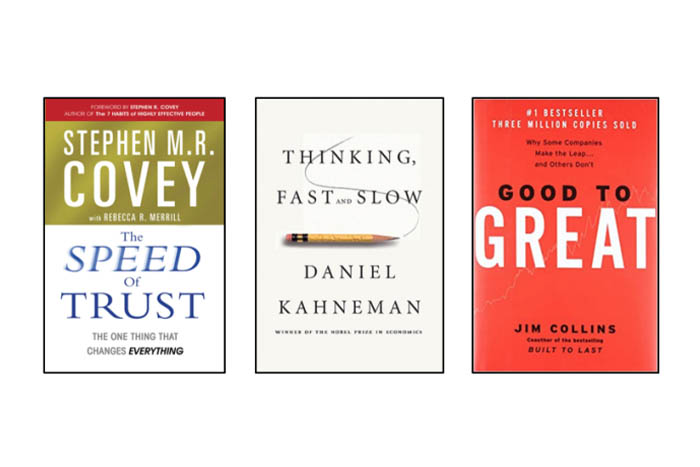
Psychologist Daniel Kahneman offers an answer. He distinguishes between two human thinking systems, the fast system 1 and the slow(er) system 2.
- System 1 can be compared to an autopilot that wants to answer as quickly as possible in order to use as little energy as possible. Because of that low energy consumption, people naturally prefer to use this system. The downside is that it is highly prone to making mistakes. Was your answer to the hockey question €0.10? Then unfortunately you made a mistake and probably used system 1.
- System 2 is switched on when a direct solution is not immediately obvious. This system works more slowly and costs more energy, but at the same time it is far more critical and attentive than system 1. System 2 is therefore not easily fooled and responds more effectively to situations or problems. Was your answer to the hockey question €0.05? Then you are right and you probably used system 2.
Drawbacks of the autopilot
Naturally our autopilot does not only influence the answer we give to a misleading question about hockey equipment. In the workplace too, many things are steered automatically by people who, on the basis of their personal drivers, all have different colours. This can cause situations or problems to be misjudged and miscommunication to arise. And we all know: that does not exactly benefit the collaboration.
MyHabits teaches you to pause at crucial moments
To prevent this, MyHabits teaches you to press your ‘pause button’ at crucial moments. Recognising those crucial moments is very important, because they look different for each driver. Someone with a predominantly red driver is best off pressing the pause button when displaying forceful or unsubtle behaviour, and someone with a predominantly yellow driver when over-analysing matters and making them unnecessarily complex.
What steps could you still take towards showing more effective behaviour in the workplace?
References
- Frederick, S. (2005). Cognitive Reflection and Decision Making. Journal of Economic Perspectives, 19(4), 25-42.
- Kahneman, D. (2017). Thinking, fast and slow.
- Stijfs, M. & Crijns, J. (2021). Haal het beste uit mensen en teams.
Rather experience for yourself what drives you?
Take the free miniscan and discover in a few minutes what moves you.
More blog articles

The role of colours in organisations
1 July 2021

The truth is always coloured
13 April 2021
MyDrives MyHabits MyMatch in relation to three of the world’s best management books
18 January 2021