
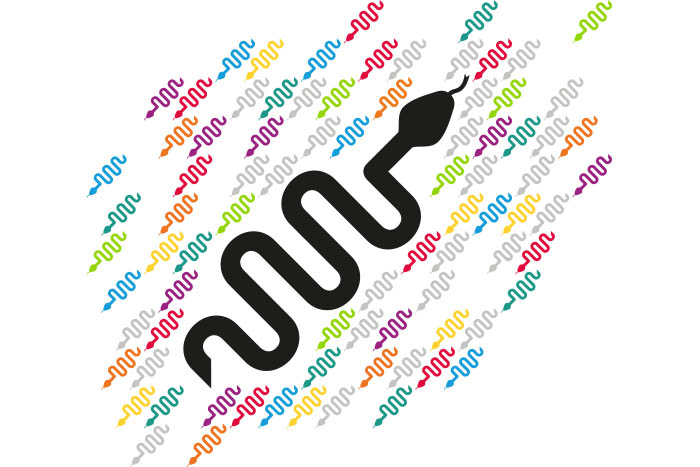
The cobra effect arises when a solution makes the original problem worse. Where does that name come from? From here: the British government of India was at the time concerned about the large number of venomous cobras in the city of Delhi. They were biting the population, causing a great many casualties. That same government came up with a brilliant idea. Anyone who handed in a dead cobra received a reward. It worked well. Very well indeed.
Clever: the Indians start breeding cobras
Only: after a while it looked very much as if the cobra population was starting to increase again. The British looked for the cause and found it. What turned out to be the case? The Indians had started breeding cobras in order to claim the reward. The reward programme was stopped, after which the Indians released the now ’worthless’ snakes. The result: there were even more dangerous cobras than before. The problem had only got worse.
Sales results lag behind
I recently spoke with a client who was struggling with sales orders that were falling short. And that while the economy was growing. The client called the team together, after which they came up with the plan to steer more tightly on input so that output could be increased. That meant more calls, more quotations and a more direct, read more aggressive, approach to customers. According to MyDrives theory this is a logical line of reasoning from the orange-red driver of the team in question.
Here too: the cobra effect
Sales orders did indeed increase because new customers were brought in. What the team had overlooked: because of the strong focus on new customers, the number of repeat orders from existing customers fell sharply. The final result was that the new sales orders could not compensate for the loss of repeat orders. Here too the problem had only got worse.
One-sided teams and stress
We analysed the example above during a MyDrives workshop. It concerns a team in which a great many orange (result-oriented) and red (decisive) drivers have been brought together. The strength of this team is that all team members think alike and therefore quickly agree on the solution to the problem: we have to perform now. But there is a but. When one-sided teams work under stress, team members start, usually unconsciously, to display more of the same behaviour in order to solve the problem.
Look at a problem from different angles
And so every team has its own typical characteristics when the pressure rises sharply. Predominantly green teams start consulting more, yellow teams start analysing more. What works better is to look at the solution to a problem from different angles, from different drivers. Back to the company example above: the yellow driver might conclude that it would be better to tap into other market segments. Or the green driver emphasises that existing customers must not be forgotten.
Conclusion
Put together a team in which several drivers are represented, so that you can look at a problem from several sides and arrive at an adequate long-term solution. That is the best way not to get caught out by the cobra effect.
Rather experience for yourself what drives you?
Take the free miniscan and discover in a few minutes what moves you.
More blog articles
A mismatch affects both employee and employer
21 September 2017
Team-building session via colour analysis: 7 common mistakes
29 August 2017
The Blockchain Blog
20 April 2017