
A year ago I read an article about Ethereum. I thought: there we have yet another digital coin in the list alongside bitcoin, dash, monero and all the rest. Until then I had shown little interest in digital currencies, or cryptocurrencies. Until I discovered that cryptocurrencies are far more than digital coins. I became increasingly enthusiastic about the underlying blockchain technology.
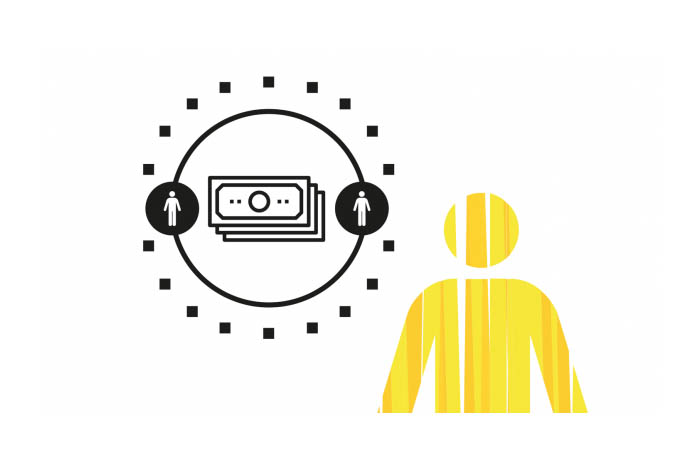
Blockchain technology allows you, for instance, to send digital money securely between two people without a bank in between. That sounds simple, but it is not. When you email a PowerPoint file to someone, you and that other person each have a copy of that file. When you send someone €100, the intention is of course not that you still have a copy of it yourself. Banks currently take care of that. This so-called ’double spending problem’ is solved through blockchain technology. In the coming years this technology will unleash a revolution on a global scale by cutting out intermediaries in many sectors. What will the role of banks be? Or think of the music industry. There, a singer places their track on the blockchain, and when the track is played they receive their income directly. So there is no publisher or Spotify in between. Consider what that could mean for your own business.
A magic book
How exactly does the blockchain work? That is a complex technical story. For me the metaphor used by Galia Benartzi was illuminating. Imagine a magic book. Anyone who wants one can get a free copy. The magical part of the book: everyone can add text to it, and that text automatically appears in all the copies. The collected texts are transactions recorded in a gigantic Excel spreadsheet. Transactions can only take place once the right conditions have been met, such as the use of a password. After a transaction has taken place, it can never be changed or removed. In simple terms, that is how the blockchain works. It is by now available worldwide in decentralised form on millions of computers. So there is not one person or one party determining what happens, which prevents monopolies and possible abuse of power. Back to the magic book: to acquire a majority stake you would have to get hold of at least 51% of all the copies, and that is an improbable task.
Trust in the blockchain
An important characteristic of the blockchain is that data items are continuously recorded within the system, which forms a major obstacle to manipulation and forgery. Through the blockchain we can exchange things securely with each other because:
· The sender or seller can be trusted.
· The transaction actually takes place (trust again).
· The recipient or buyer receives what was agreed (trust once more).
And speaking of trust: the high traceability that characterises the blockchain also means you know exactly which product comes from which country. Italy, for instance, sells more litres of olive oil every year than is possible on the basis of the number of olive trees in the country. Cheaper olive oil from North Africa is added to the ’Italian’ quota. The blockchain can counter this.
Cryptocurrencies growing by a factor of 100
There are now more than 700 cryptocurrencies active worldwide with a combined value of almost 30 billion dollars. That is a doubling compared with the end of last year. (Source: www.coinmarketcap.com). 30 billion dollars is a lot, but when you set that amount against the quantity of fiat money or the market value of Microsoft (500 billion dollars at the start of this year), it is not all that much after all. I think the value of cryptocurrencies will grow by a factor of 100 over the next 10 years. This because more and more people will discover the blockchain, and Ethereum in particular, and start investing in it. Take a look too at the website of the promising Humaniq. This fourth-generation mobile bank is building an application and uses the Ethereum blockchain to give people worldwide access to internet banking and thereby to trade.
Strong yellow thinkers at the basis of the blockchain
If we apply the MyDrives colour theory to this article, you can see that technologies such as the blockchain are conceived and developed by very strong yellow thinkers. It takes considerable outside-the-box thinking power to turn this kind of disruptive idea into working methods. Because of ever-increasing globalisation, turquoise-coloured people have in any case been on the rise in recent years. Blockchain technology will give them an extra push. Turquoise-coloured people are convinced that everything in the world is inextricably connected. Blockchain technology is a shining example of that.
I am not a financial expert and this document is not intended as investment advice. What I do know: never invest money you cannot afford to lose. And bear in mind that past results are no guarantee for the future.
Rather experience for yourself what drives you?
Take the free miniscan and discover in a few minutes what moves you.
More blog articles
Relaxed MyDrives gathering about stress
27 March 2017
How stress leaves me cold-shouldered by myself
1 February 2017

Just go and do what you want
6 October 2016