'Surely people have no desire at all to be made to listen to a coach by their employer?'
This was said to me when I was visiting a family member. My answer was simple: 'Someone who only talks and expects the other person to follow their advice is not a coach at all. Or at best a bad one.' That remark by my family member, and by many more people, is therefore a misconception.
The right advice comes from the coachee
A good coach does not in fact speak all that much, because they know that the right advice can only come from the coachee themselves. Asking strong questions, listening carefully yourself and being critical of the coachee's input with the coaching question in mind: that is how a good coach makes the difference. I can already hear you object: 'Fine, Max. Asking questions, listening and being critical. Then surely I can make the difference too, without your methodology?'
Seeing at a glance what you really value
There are indeed plenty of coaches who work without a methodology. Some even prefer it. Yet the use of good methodologies is growing extremely fast among coaches and within organisations. Because those methodologies are a powerful means of seeing at a glance what you, as a coachee, colleague or applicant, really value and what makes you happy. Experience has taught me that this information is also highly usable during coaching conversations.
So many new insights
In the words of a participant in the MyHabits programme:
'I could never have imagined beforehand that I would gain so many new insights.'
She said this in response to the coaching and the clear MyDrives and MyHabits report she had received. All in all it was at once a celebration of recognition and a confronting mirror for her.
A follow-up conversation
On the basis of the MyHabits report we talked further about what gives her energy in the workplace. And about how she looks at her own behaviour at work and how colleagues look at it. This follow-up conversation produced even more important insights that helped us map out the most fitting action points.
Three useful tips:
1. At the start of your conversation, ask the open question: 'If we did not have a report, what would you want to work on yourself?' Then consider how that answer connects with the results of the MyHabits report.
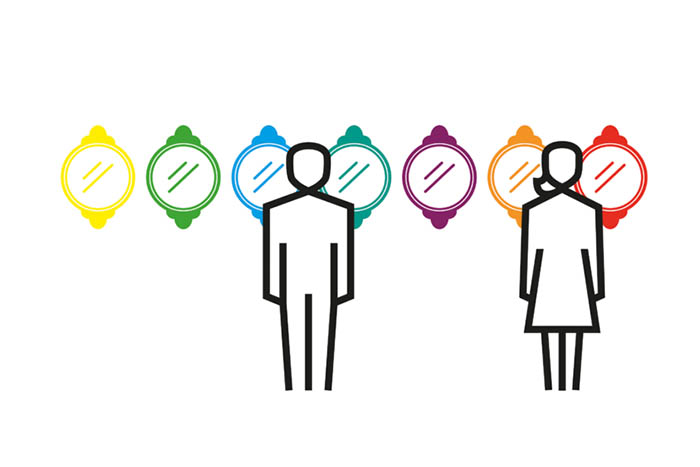
2. When reviewing the MyDrives preferred roles (the first think-feel-act triangle), ask the coachee: 'What do you think yourself? Which colours have colleagues recognised in your behaviour?' Then tell the coachee which roles the respondents assigned and talk it through.
3. Before the coaching conversation, go through the MyHabits report thoroughly and see whether someone over- or underestimates themselves. (This in combination with the competency 'Self-confidence' under the heading 'Performing' often produces relevant topics.) And was the coachee assessed mainly by, say, green or red types? Stay aware of the context.
Curious about our reports, or would you like more useful tips? Then feel free to get in touch. You can reach me on 06 46 72 19 97 or via my LinkedIn profile. In the meantime, every success with using MyDrives and MyHabits in your own coaching conversations.
Rather experience for yourself what drives you?
Take the free miniscan and discover in a few minutes what moves you.
More blog articles

A compliment for the employee who makes the most mistakes
15 December 2022

How can lobsters still grow inside their hard shell?
3 February 2022

The maximum deployment of all drivers led to Max’s world title
16 December 2021