
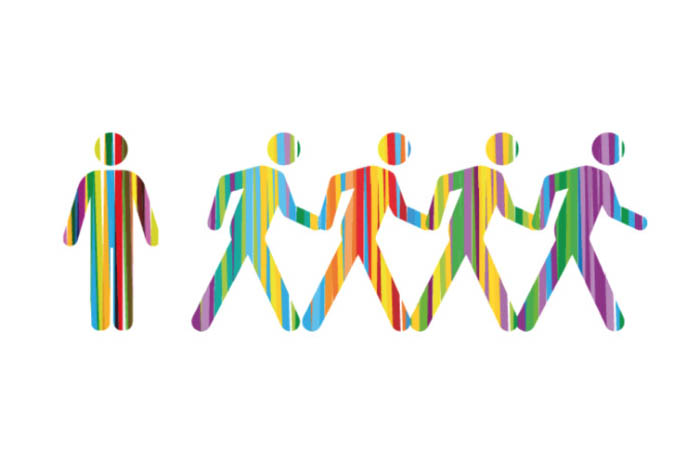
Culture is a word I hear a lot when I run workshops about individual drivers and behaviour. Wherever people work together, a culture emerges by itself. Usually we adapt to one another unconsciously, so that a fixed and recognisable pattern arises. And that is a good thing. Otherwise working together would become a very difficult story indeed. Charles Darwin already knew that it is not the strongest or the smartest who survive, but those best able to deal with changing circumstances. That applies to individuals, but also to teams and even to entire organisations.
Exaggerating behaviour
When employees adapt to each other without losing sight of their authentic selves, the best results generally follow. But at the same time a danger lurks here: when there are too many similar personalities within a team, this can lead to exaggerated behaviour. An action-oriented team, for instance, will often take even more action when results disappoint. Pausing for a moment and looking through a creative lens at how you could work more intelligently is then an option. Something else you regularly see: teams that want to expand hire like-minded people. This makes the chance of exaggerated behaviour greater still, while the organisation's chances of success can shrink as a result.
Nothing but diversity then?
No. The fact that several subcultures exist within organisations is in part certainly positive. Just consider it. It is logical that, for example, a finance department requires different personalities and qualities than a sales department. Put differently: try asking within your own organisation whether a finance employee would like to swap roles with someone from sales. Or the other way round. Usually they do not really feel at home in a different subculture. A culture programme with a one-size-fits-all approach will never be truly successful and will often cost more energy than it delivers.
Continuously adjusting culture
The person ultimately responsible within an organisation therefore faces a continuous challenge. If the organisation is to be successful in the long term, they will constantly have to look for the right balance between too many employees with a comparable personality and too many employees with a non-comparable personality. Culture is thus a highly active thing. There is no such thing as the culture of an organisation. Not even by adding up all the subcultures. What does exist: the best fitting culture at a particular moment within a department or team.
mydrivesmyhabits.com
Want to know more about the role of drivers within cultures and about managing human behaviour? Visit mydrivesmyhabits.com.
Rather experience for yourself what drives you?
Take the free miniscan and discover in a few minutes what moves you.
More blog articles
Not managing harder, but looking differently
7 September 2026

The holiday test
3 August 2026
They are still here. But they no longer join in.
12 July 2026