You don’t have to be ill to get better
The MyDrives MyHabits MyMatch total methodology focuses on people’s most important drivers, the behaviour that stems from them and the environment in which someone finds themselves. This creates a complete picture that answers the question: why do people do the things they do? In our workshops, we often work together with high-performance expert Paul Rulkens to do exactly that.

Flow, stress and an eye for others
When your behaviour is in line with your drivers, flow emerges. When it is not, stress is a logical consequence. It is also important to have an eye for others. When you look solely through the tinted glasses of your own perspective, you have only a subjective perception of the people around you.
When your behaviour is in line with your drivers, flow emerges. When it is not, stress is a logical consequence.
Steps forward through flexible behaviour
The environment in which someone finds themselves and their drivers are fairly fixed factors. This makes dealing flexibly with your behaviour the fastest and most effective way to take steps forward. In practice, that is sometimes a little less easy than you might expect. That is why, during our workshops, we often work together with high-performance expert Paul Rulkens to give the emergence of flexible behaviour an extra push. Paul regularly begins a workshop with the statement: ‘You don’t have to be ill to get better.’ What he means is this: thanks in part to years of experience, we are usually already good at what we do. But by sparring with one another in a refreshing way, we can become even better. In doing so, Paul puts the concepts of clarity, focus and execution centre stage. Because they form the basis for high-performance behaviour and the results that come with it.
Clarity: where do I want to go?
When it comes to clarity, Paul addresses the importance of vision and connection. Organisations that have neither are stuck. And anyone who does have a vision but lacks connection rules from an ivory tower. Conversely, organisations that have plenty of connection but a shortage of vision get stuck in the kumbaya feeling of the scouts. Only vision and connection together open up the clear path for organisations towards genuinely building a high-performance culture.
Focus: stopping strategically
When it comes to focus, Paul points, among other things, to the importance of stopping strategically. To illustrate this, he uses the image of a child hanging from a climbing frame. If it keeps clinging on tightly with both hands, nothing happens. Just like a child, an organisation has to ‘let go’ of things, as it were, before any progress can be made. Put differently: which activities do not contribute to achieving the organisation’s goals and the intended high-performance culture? Another comparison. Imagine you have produced a report or document that took many hours of work. Try sending that document on with a protected password. If no one asks you for the password, then that is an activity you could strategically stop doing.
Execution: what makes the boat go faster?
When it comes to execution, Paul talks, among other things, about the British rowing team that, in 1998, appointed a new coach after a series of dismal results. That coach introduced just one new rule: from now on, with everything we do, we ask ourselves whether it makes the boat go faster. A wild party on the evening before a training session does not, while an extra Sunday-morning session on the Thames does. In this way, Paul draws the link to high-performance behaviour within organisations that stop activities which contribute nothing to their most important goals. How did the story end? Two years later, the eight British rowers claimed the gold medal in Sydney. It was the first British victory at the Summer Olympics since 1912.
Coloured nunchucks
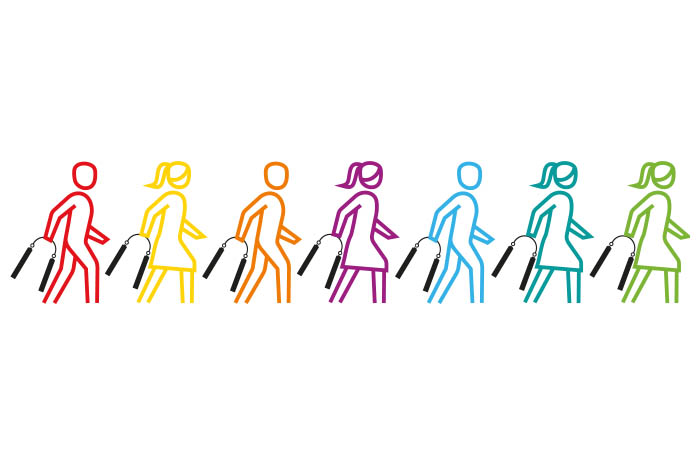
The beauty of Paul’s philosophy is that the three pillars of clarity, focus and execution fit perfectly with the seven-colour theory used by the MyDrives MyHabits MyMatch total methodology. The pillar of clarity aligns seamlessly with the yellow driver, which naturally has understanding and analysing within it. Focus on the goal fits excellently with the competitive and results-driven orange driver, and the pillar of execution clearly returns in the decisive and action-oriented red driver. These are the three individually focused drivers. Alongside them are the four group-focused drivers. Those matter too. Because on your own you can certainly set quite a pace, but only together do you get further.
Want to know more about high-performance expert Paul Rulkens? Then take a look at his website: paulrulkens.com.
You don’t have to be ill to get better.
Paul Rulkens’ three pillars, clarity, focus and execution, align seamlessly with the yellow, orange and red drivers of MyDrives and give flexible, high-performance behaviour a concrete and practical language.
Ready to get started with your team or organisation?
Discover what MyDrives MyHabits MyMatch can mean for your collaboration, leadership and development. We’re happy to think along with you.