On Reddit, thousands of people describe how they quietly cracked at work. They did not call in sick and they did not resign. They stayed, and simply stopped joining in.
What is quiet cracking?
You probably already knew quiet quitting: deliberately easing off. Quiet cracking is something else. Not a choice to disengage, but something that slowly breaks.
The term has been circulating on Reddit for months, where people describe anonymously how it went for them. And it has recently started appearing in Dutch HR media too. It describes people who keep performing but are draining away inside. Worldwide, only one in five employees is genuinely engaged at work.
The treacherous part is the outside. The work gets done. The meeting is attended. Only when someone leaves, or collapses, do you see that the crack had been there for a long time.
Why you do not see the crack
You can see behaviour. You cannot see drivers.
Think of an iceberg. Above the water is the visible behaviour: what someone says, does and shows. Below the water are the drivers: what naturally gives someone energy, and what eats it up.
Quiet cracking happens below the waterline. A driver that is structurally starved usually does not shout. It goes quiet.
And that is where the trap lies for you as a manager. You steer on what you see. But above the water everything still looks fine.
Disengagement has seven faces
You do not recognise quiet cracking by what someone does. You recognise it by what someone no longer does.
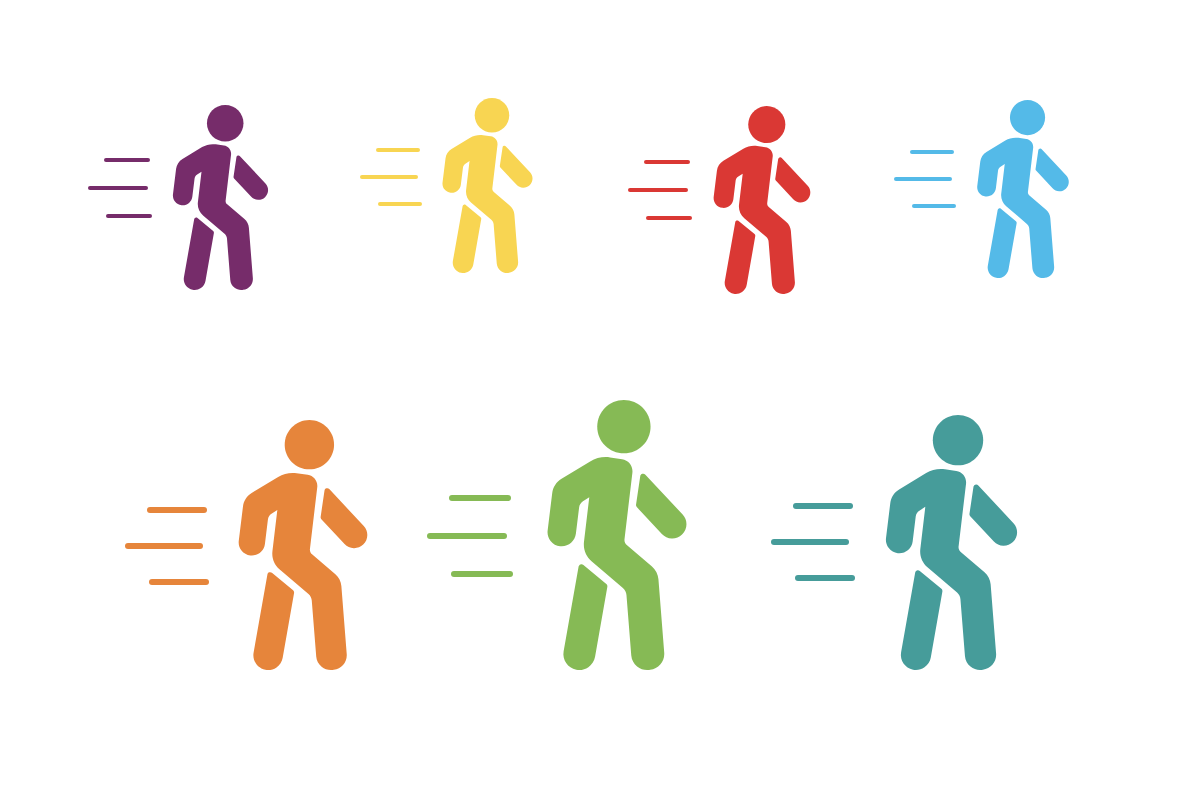
And that differs per driver. What disappears is precisely the behaviour someone naturally displayed:
- Red stops making the call. The quickest decision maker at the table becomes noticeably silent.
- Orange stops spotting opportunities. No new goals any more, only ticking things off.
- Yellow stops thinking along. The critical questions no longer come, and that is not agreement.
- Green stops caring. Nobody asks how you are really doing any more.
- Turquoise stops putting things in perspective. The view of the bigger picture narrows to their own task.
- Blue stops guarding. Sloppiness that would never have got through before now slips through.
- Purple stops connecting. The steady presence everyone knows skips the team lunch.
Do you see the pattern? The loudest signal is the silence in the place where the energy used to be.
What you could do differently this week
The question is therefore not: who is performing poorly? The question is: what am I no longer seeing?
Go through your team, person by person. Not looking for problems, but for what has disappeared. The joke that is no longer made. The question that is no longer asked. The initiative that used to always be there.
And an honest caveat belongs here. You too look through a coloured lens: that of your own drivers. You notice the behaviour you consider important disappearing. The rest you miss. Anyone with high red will immediately see decisiveness ebbing away, but is slower to notice that someone else is missing good communication.
That is precisely why paying closer attention is not enough. You have to know what naturally drives each team member. Only then do you know which silence means something.
Silence does not have to become a crack
Quiet cracking is not a motivation problem and not a generational thing. It is a driver that went without nourishment for too long. And the people it happens to do not talk about it at work. They talk about it on online forums such as X or Reddit.
It can be different. Not by steering harder on behaviour, but by understanding what lies beneath it.
Would you like to know what naturally drives your team members? Start small: the free Miniscan gives a first picture in five minutes. And if you would like to talk further about what silence means in your team, book an introduction. We will think along with you.
Rather experience for yourself what drives you?
Take the free miniscan and discover in a few minutes what moves you.
More blog articles
Leadership does not start with your style
9 July 2026
What is a drivers assessment?
18 June 2026
The promotion paradox
20 May 2026